With rising demand for sustainable agriculture, manure-based biofertilizer production has become an attractive business opportunity. Livestock waste such as cow dung, chicken manure, and pig manure can be transformed into high-value bio organic fertilizer through a well-designed manure biofertilizer manufacturing line. This article explains how to set up a complete production line, what equipment is required, and which raw materials can be processed.
1. What Is a Manure Biofertilizer Production Line?
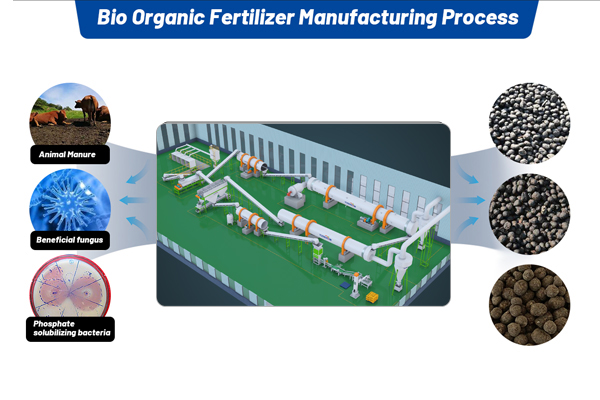
A manure biofertilizer production line is an integrated system that converts animal manure into stable, nutrient-rich fertilizer products. Depending on market demand, the final product can be powdered organic fertilizer, granular biofertilizer, or bio organic fertilizer with beneficial microorganisms.
Compared with traditional composting, a modern biofertilizer plant improves fermentation efficiency, product consistency, and commercial value. Learn more!
2. Typical Equipment Configuration
A standard manure biofertilizer manufacturing plant usually includes the following sections:
Raw Material Pre-treatment
Fresh manure often has high moisture content. Dewatering machines such as solid-liquid separators reduce water content and prepare materials for fermentation. Crushers and mixers help achieve uniform particle size and proper carbon-nitrogen balance.
Composting and Fermentation System
Aerobic fermentation is the core step. Equipment options include windrow compost turners, groove-type compost turners, or enclosed fermentation tanks. These systems ensure proper oxygen supply, temperature control, and fast decomposition of organic matter.
Crushing and Screening
After fermentation, compost is crushed and screened to obtain uniform material. This step improves product appearance and prepares the material for further processing.
Granulation and Shaping (Optional)
For higher market value, compost can be processed into pellets using disc granulators, drum granulators, or roller press granulators. Granular biofertilizer is easier to package, transport, and apply.
Drying, Cooling, and Packaging
Rotary drum dryers reduce moisture for stable storage, while cooling machines prevent caking. Automatic or semi-automatic packing machines complete the production line.
3. Raw Materials That Can Be Processed
A flexible manure biofertilizer production line can handle a wide range of organic wastes, including:
- Cow dung, cattle manure
- Chicken manure, poultry litter
- Pig manure, swine waste
- Sheep and goat manure
- Manure mixed with straw, sawdust, rice husk, or crop residues
This adaptability allows producers to use locally available raw materials and reduce biofertilizer production costs.
4. Why a Proper Line Setup Matters
A well-planned manure biofertilizer production system improves fermentation stability, reduces odor, and ensures consistent fertilizer quality. More importantly, a scalable equipment configuration allows producers to start small and expand capacity as the business grows.
Conclusion
Setting up a manure biofertilizer manufacturing line is a practical way to convert agricultural waste into profitable fertilizer products. With the right equipment selection and process design, livestock manure can become a reliable resource for sustainable fertilizer production.
For investors and fertilizer producers, choosing a professional production line solution is the key to efficiency, product quality, and long-term profitability. Welcome to visit:https://www.biofertilizerproduction.com/product/5-t-h-manure-biofertilizer-business-plan/
No Responses