When you start looking into fertilizer blending equipment, you may notice that it is not only about comparing prices. You usually need to think about your materials, output goals, accuracy needs, automation level, workshop conditions, and what kind of support you expect from the supplier. If you take time to review these points before start a Bulk Blending fertilizer business, you can often avoid issues like uneven mixing, formula mistakes, or unexpected downtime later on.
Understand Your Raw Materials First
You may want to begin with the fertilizers you plan to use, such as urea, DAP, MAP, ammonium sulfate, or potassium chloride. Their particle size, density, moisture, and hardness can all influence how smoothly they move through the system and how evenly they mix. If the differences between materials are quite large, you might notice separation during conveying or packaging.
It can be helpful if you share your material details with the supplier and, if possible, arrange a small test. In this way, you can better match the equipment setup with your real formulas, including how many ingredients you use and how often you change recipes.
Think About Capacity and How You Plan to Produce
When you consider capacity, you may want to focus on the amount of finished product you expect rather than just the machine’s rated output. It helps to clarify your hourly production, working schedule, batch size, packaging style, and how long you might need for cleaning or switching formulas.
An automatic fertilizer batching and blending system could be suitable if you handle multiple formulas and need more consistent weighing records. If your product range is simpler, you might prefer a more basic setup. The level of automation you choose often depends on your labor situation, production frequency, and how you expect your business to grow.
Pay Attention to Weighing and Mixing Performance
When you review a quotation, you may want to check details like weighing accuracy, mixing time, discharge method, and control settings. It is also useful to see whether different ingredients are dosed separately, especially for small additives.
Elements like load cells, feeder response speed, calibration method, and software control can all influence how close your final product is to the intended formula. During mixing, you might prefer a process that is gentle enough to protect granules but still ensures even distribution. You can also ask how sampling is done and how the system deals with residue or cross-contamination.
Consider Your Plant Layout and Site Conditions
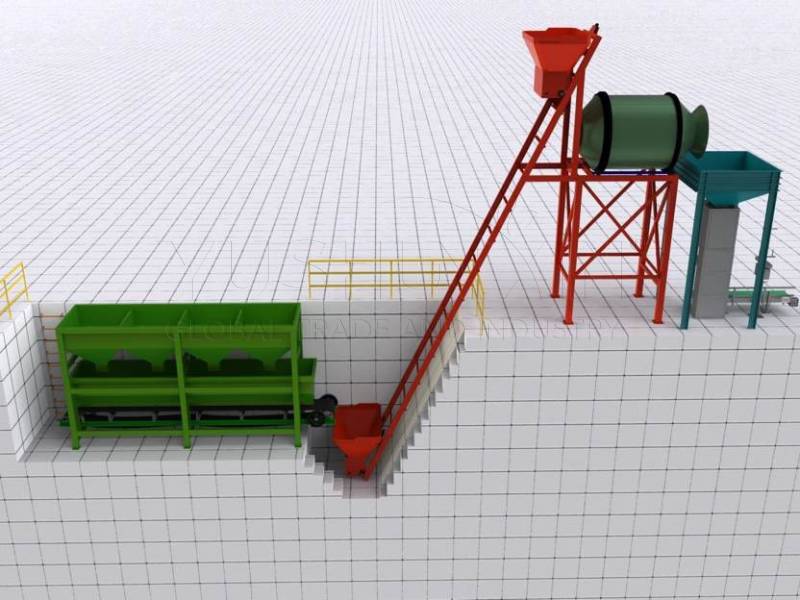
A well-planned fertilizer blending plant layout usually takes into account material receiving, storage, feeding, mixing, buffering, packaging, palletizing, forklift movement, and dust control. Before finalizing a design, you may want to check your building height, floor strength, power supply, air source, and available installation space.
If the layout is arranged well, you can often reduce unnecessary material transfer and lower the chance of segregation caused by long drops. At the same time, you may also want to keep enough space for inspection, cleaning, and maintenance work. Click here for more details.
Clarify What the Supplier Will Provide
When you look at a turnkey fertilizer blending plant, it helps to understand what is included in the package. You may want to confirm whether conveyors, platforms, control cabinets, dust systems, packaging units, installation guidance, training, and spare parts are part of the offer.
It is also a good idea to compare service terms such as warranty, response time, delivery schedule, and acceptance process, instead of focusing only on price. If you think you may expand into compound fertilizer production later, you might also want to check compatibility with an NPK fertilizer blending plant before making final decisions.
When you gather clear information about your materials, capacity, layout, and service needs, you can usually compare different options more confidently and choose a solution that fits your long-term production plans with fewer risks. If you are interested in this project, you can visit https://www.shunxin.eu/bulk-blending-fertilizer-plant/.
No Responses