When you produce blended fertilizer, maintaining a uniform nutrient distribution is an important part of delivering consistent product quality. Fertilizer segregation may happen when different granules separate because of differences in particle size, density, or handling conditions.
For a bulk blending project, understanding how materials move through the system can help you create a more stable production process. By optimizing equipment selection, mixing methods, and transportation procedures, you can reduce quality variations and improve customer satisfaction.
Understand Why Fertilizer Segregation Happens
Bulk blending fertilizer combines different granular materials such as nitrogen, phosphorus, and potassium sources. Because these materials may have different physical properties, separation can occur during storage, transfer, or transportation.
When you plan the cost of setting up a fertilizer blending plant, you can consider not only equipment investment but also how the system manages material flow, mixing performance, and finished product handling.
Factors such as large differences in particle size, excessive dropping height, and improper transfer methods may influence the final fertilizer uniformity.
Optimize Equipment Selection and Mixing Process
A suitable mixing system helps different fertilizer granules combine evenly before packaging. The mixer design, mixing time, and material flow direction all influence blending performance.
Working with a professional bulk blending fertilizer equipment manufacturer allows you to evaluate different equipment configurations based on your raw materials and production requirements.
A complete system may include storage hoppers, automatic batching equipment, fertilizer mixers, conveyors, and packaging units. Reviewing the bulk blending fertilizer plant flow chart helps you understand how each stage connects and where segregation risks may appear.
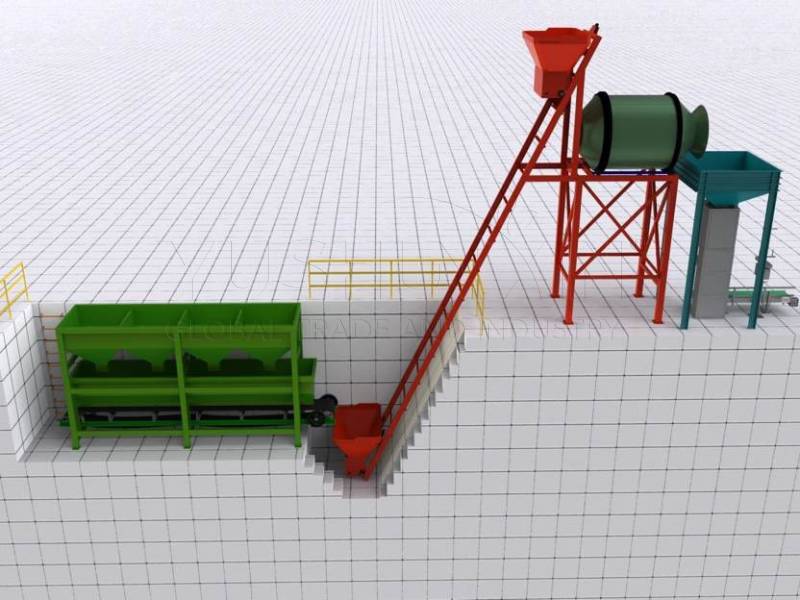
Improve Material Handling After Mixing
Even with good mixing performance, fertilizer particles may separate during transfer if handling conditions are not suitable.
You can focus on reducing unnecessary drops, controlling conveyor speed, and selecting proper storage and transportation methods. These details help reduce fertilizer segregation during transportation and maintain product consistency when fertilizer reaches customers.
For bulk blending plants, the connection between mixing, storage, and packaging plays an important role in maintaining final product quality.
Improve Packaging and Final Product Stability
The packaging stage is the final step before fertilizer enters the market. A suitable packaging system helps protect the blended material and improves handling efficiency.
A fertilizer packing machine for BB fertilizer can work together with the blending system to complete accurate weighing and efficient bagging.
By combining proper mixing technology, controlled material handling, and suitable packaging solutions, you can create a more reliable bulk blending fertilizer production process.
Click here for more details to explore complete bulk blending fertilizer solutions.
Build a More Stable Bulk Blending Fertilizer Solution
Preventing fertilizer segregation involves more than choosing a mixer. Your raw materials, equipment layout, production process, and packaging system all influence the final result.
By evaluating these factors during project planning, you can develop a bulk blending fertilizer plant that matches your production goals.
For more information about bulk blending fertilizer equipment and production solutions, you can visit https://www.shunxin.eu/bulk-blending-fertilizer-plant/
No Responses