How easy will it be to inspect your line and replace worn parts? That is worth discussing before you place an order. Start your phosphate rock pelletizing line abrasive wear review with a sample of your own powder, then work through the proposed layout with the supplier.
Start with your own material
Share what you know about the powder: its mineral composition, particle sizes, moisture, and any unwanted material mixed in. Then discuss which tests could help assess wear. Keep a record of where the sample came from. Results from another rock source may not tell you enough about yours.
Look beyond the granulator
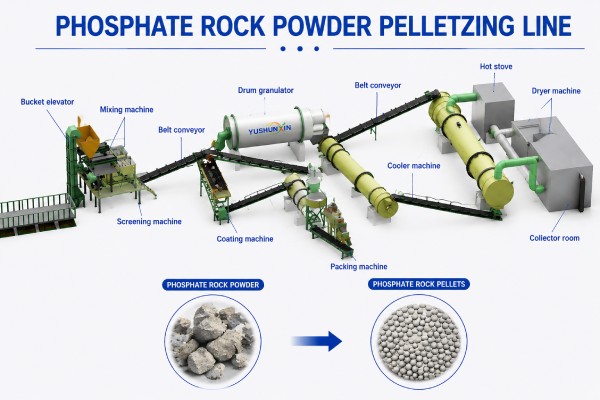
Have the supplier mark phosphate powder granulation equipment wear surfaces on the process drawing. Include feeders, mixers, screens, and return conveyors in the discussion. Which parts are replaceable, and why were those materials chosen? If you are considering rotary drum granulation equipment, use your sample results to discuss the proposed design. Ask what evidence supports any estimate of part life.
Make room for maintenance
Check phosphate rock pellet plant liner access while you can still change the layout. Can your team reach the inspection openings? Is there room to lift out a worn part without removing nearby equipment? Walk through the replacement steps with your maintenance team, including how the equipment will be isolated. Add any access work to the quotation before you approve it.
Keep the trial useful
For phosphate mineral pelletizing system wear monitoring, agree where to inspect and what to record. Photos, operating hours, material quantities, and notes on visible changes give you a starting point. Decide who will review the findings with you. A short trial alone is not enough to promise how long a part will last in daily production.
Know what comes with the order
Include phosphate rock granulation line replacement planning in your final quotation review. Get a clear spares list with part numbers, prices, and delivery estimates. Check whether drawings, fitting instructions, and special tools are included. That gives your team something concrete to work with when a replacement is needed.
Also keep your product goal clear. Physical pelletizing forms larger particles; it does not, by itself, demonstrate chemical conversion or nutrient availability to plants. If those properties matter to your product, discuss the required process and testing separately.
Ready to discuss your line? Send the supplier your feed details and maintenance questions. Click here for more details and use them to guide the conversation.
https://www.granulationproject.com/product/phosphate-rock-powder-pelletzing-line
No Responses