Mineral clay can create dust, flow, and packing problems when a fertilizer plant handles it only as fine powder. A clay soil granules machine for fertilizer plants can turn prepared bentonite or other suitable clay materials into controlled granules through an appropriate fertilizer granulation process. You can improve production planning when you define raw-material moisture, viscosity, particle size, desired granule size, and hourly capacity before equipment selection. Those variables also determine which supporting machines the plant needs.
Which clay raw materials can enter a mineral fertilizer granulation process?
A clay fertilizer project may process bentonite, kaolin-rich material, attapulgite-type clay, mineral soil conditioners, or clay-based blends with other powdered minerals. Each feedstock behaves differently during crushing, mixing, compaction, and agglomeration. The term clay mineral covers several mineral groups, so the project should confirm composition and handling characteristics instead of selecting machinery only from the material name.
The raw-material preparation stage should remove large lumps and stabilize feed size. A crusher can reduce agglomerated clay before mixing. A fertilizer mixer can distribute different mineral components and any permitted process aid evenly. The plant can then feed a more uniform material into the granulation machine.
A bentonite clay granulation equipment for sale should match the actual raw material rather than a generic clay description. A supplier can make a better equipment recommendation when the buyer provides moisture, fineness, bulk density, target capacity, and a sample or test report when available.
Which granulation technique fits bentonite and mineral clay?
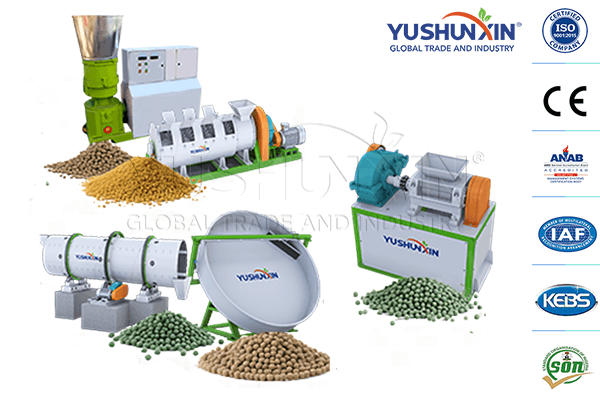
Different fertilizer granulation techniques suit different material conditions. A disc granulator grows particles through controlled tumbling and liquid addition when the formulation supports wet agglomeration. A double roller press granulator compresses suitable dry or low-moisture powder mechanically. A rotary drum system can support larger continuous granulation projects when the formulation and plant scale justify that process.
The buyer should evaluate product shape, strength, size distribution, recycle requirement, and downstream drying demand before choosing a machine. The lowest equipment price does not always create the lowest total fertilizer production cost. A process that produces too much recycle or requires difficult moisture control can increase operating cost and reduce effective throughput.
An industrial mineral clay pelletizing machine should therefore connect to the complete fertilizer production line rather than operate as an isolated purchase. The feeder, mixer, granulator, screen, and packing section need compatible capacities.
What supporting equipment improves clay granule production consistency?
A mineral fertilizer plant usually needs two or three key supporting machines around the granulator. A crusher controls feed size and breaks hard clay lumps. A mixer creates a consistent formula before pellet making. A screening machine separates qualified granules from fines and oversize material after the granulation stage. The plant can add drying and cooling when the selected wet granulation procedure leaves excess moisture in the fresh pellets.
A buyer can review common mineral fertilizer raw materials when the project combines clay with limestone, phosphate minerals, potassium materials, or other mineral components. That formulation choice affects both machine selection and fertilizer processing cost.
A clay granules production machine price should include enough information for the buyer to compare motor power, capacity range, wearing parts, material-contact requirements, and process layout. A bare machine quotation rarely explains the total investment for a commercial mineral granulation plant.
How should a buyer evaluate a clay granulation machine quotation?
A technical quotation should state feed material, capacity, inlet moisture, target product size, granulation method, recycle arrangement, electrical standard, and packing requirements. The quotation should also identify the scope for conveyors, dust collection, control cabinets, spare parts, and installation guidance. These details help the buyer compare suppliers on the same commercial and technical basis.
The project team should also calculate operating expenses for power, labor, wear parts, packaging, and raw-material handling. The plant can then compare equipment investment with expected output and selling format. You can review clay granulator specifications when the project reaches the purchase stage.
Professional mineral fertilizer equipment manufacturer Yushunxin can evaluate mineral feed properties, production capacity, granule requirements, and factory conditions before preparing a quotation. A suitable mineral fertilizer manufacturing system should support stable material preparation, granulation, screening, and packing as one connected process. More product information appears at https://www.mineralfertilizerproductionsolutions.com/product/clay-soil-granules-machine/
No Responses